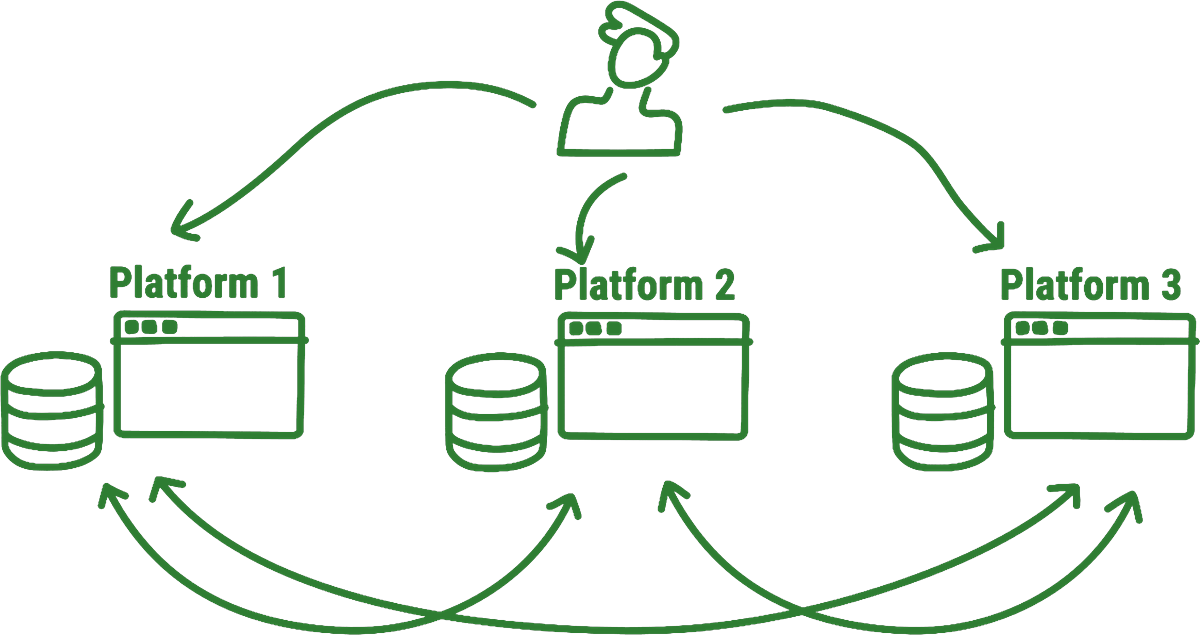
A farmer's data is scattered across the systems that happened to collect it. Field
boundaries in the registration software, spraying in the agronomy package, yields in the
machine manufacturer's cloud, soil results in a PDF from the lab. Every system keeps its
own copy, the copies drift apart, and none of them is the original.
It costs the farmer three times over. Once in re-entry: the same field, the same crop,
the same figures keyed into one more system. Once in lock-in: changing supplier means
exporting what can be exported and re-typing the rest, so most people stay where they
are. And once in reporting: nutrient balance, crop protection record, certification
scheme — each put together by hand out of data that already exists.
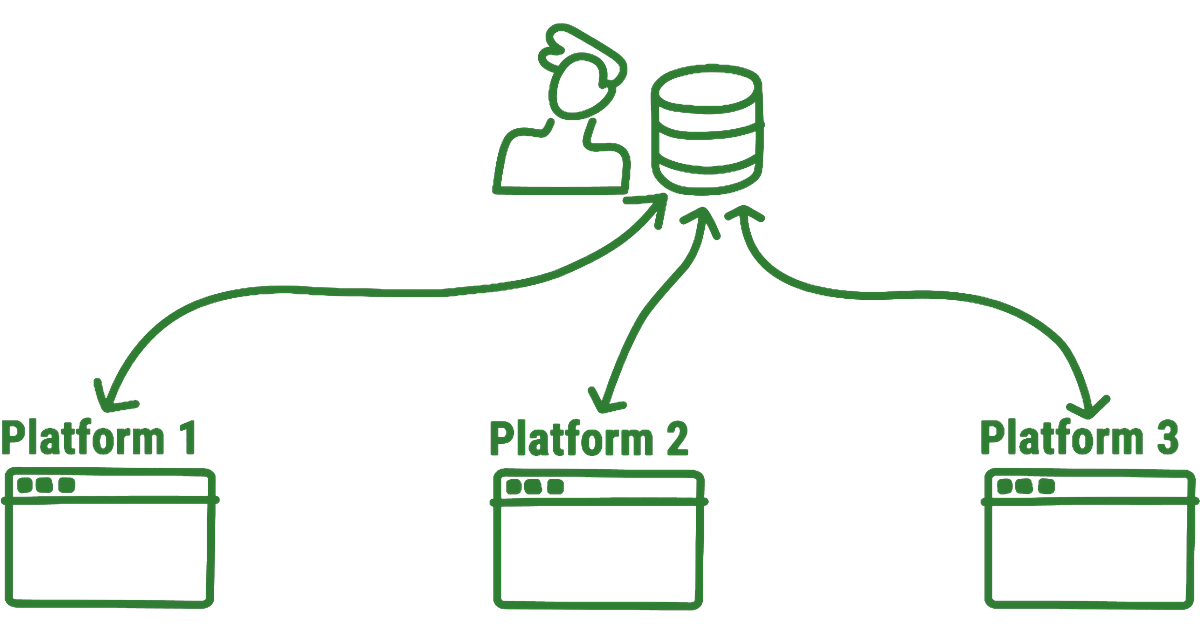
W3DS — Web 3.0 Data Space — turns it around. It separates the data from the
platforms and gives it back to the person it belongs to. The farmer's records live in an
eVault of their own instead of inside whichever application collected them.
Software is granted access to that eVault; it no longer holds the data, and the farmer
decides who reads what and can withdraw the permission.
That settles all three. Draw a field once and every system has it. Change provider and
nothing has to be moved — you grant access, you take it back. Reporting is worked out
from the original records instead of being filled in.
No single product gets you there. It takes an adapter the existing platforms can live
with, data worth reading, and services that prove the point on a real farm in a real
season. Each project below takes on one of those jobs.
 W3DS-Agro